
Beginning
One of the most important things to do when gardening is to take care of your plants. If you have a small garden, a balcony full of potted plants, or a big backyard full of trees and shrubs, the right tools for trimming and pruning make a big difference. When you use the right tools, plants that are healthy grow better, look cleaner, and make more flowers or fruit. A lot of new gardeners don’t know what tools to buy, when to use them, or how to pick the best ones. This article gives you a simple and useful list of all the tools you need for pruning and taking care of your plants, so you can build a reliable gardening toolkit that will last for years.
Knowing why pruning tools are important
It’s important to know why pruning is such a big part of gardening before you look at each tool. Plants grow in different ways, and if you don’t take care of them, their branches can get too crowded, weak, or sick. Tools for pruning help you shape plants, get rid of dead parts, encourage new growth, and keep shrubs and trees healthy. Using the wrong tool can hurt stems, rip bark, or give you an infection. This is why gardeners buy tools that make clean, sharp cuts and are easy to use. Taking care of your tools also makes gardening more fun, especially when you have to deal with thick branches or tall plants.
Hand Pruners: The Most Important Tool
The most common tool for home gardening is hand pruners, which are also called secateurs. They are great for cutting small stems, trimming flowers, getting rid of dead leaves, or shaping soft branches. When you buy hand pruners, make sure they have a sharp blade, a comfortable grip, and a strong spring mechanism. There are two main types: anvil pruners and bypass pruners. Bypass pruners cut more cleanly than regular scissors, so they are great for live stems. Anvil pruners have one sharp blade that closes on a flat surface. They work better on dry or dead wood. Every gardener should have a good pair of pruners because they use them almost every day.
Thick Branch Loppers
You need a stronger tool when the stems of plants get too thick for hand pruners. Loppers are long-handled cutters that are made to cut branches that are too thick for secateurs. The long handles give you more leverage, which makes cutting easier without having to use too much force. Like pruners, loppers can be either bypass or anvil style. They are great for cutting back fruit trees, shaping shrubs, and taking off the thicker stems of plants in the garden. The handles of a good pair of loppers should be strong, the blades should not rust, and the grip should be comfortable so your hands don’t get tired too quickly. You can get deeper into bushes with loppers without bending or stretching too much.
Hedge Shears for Neat Plant Shapes
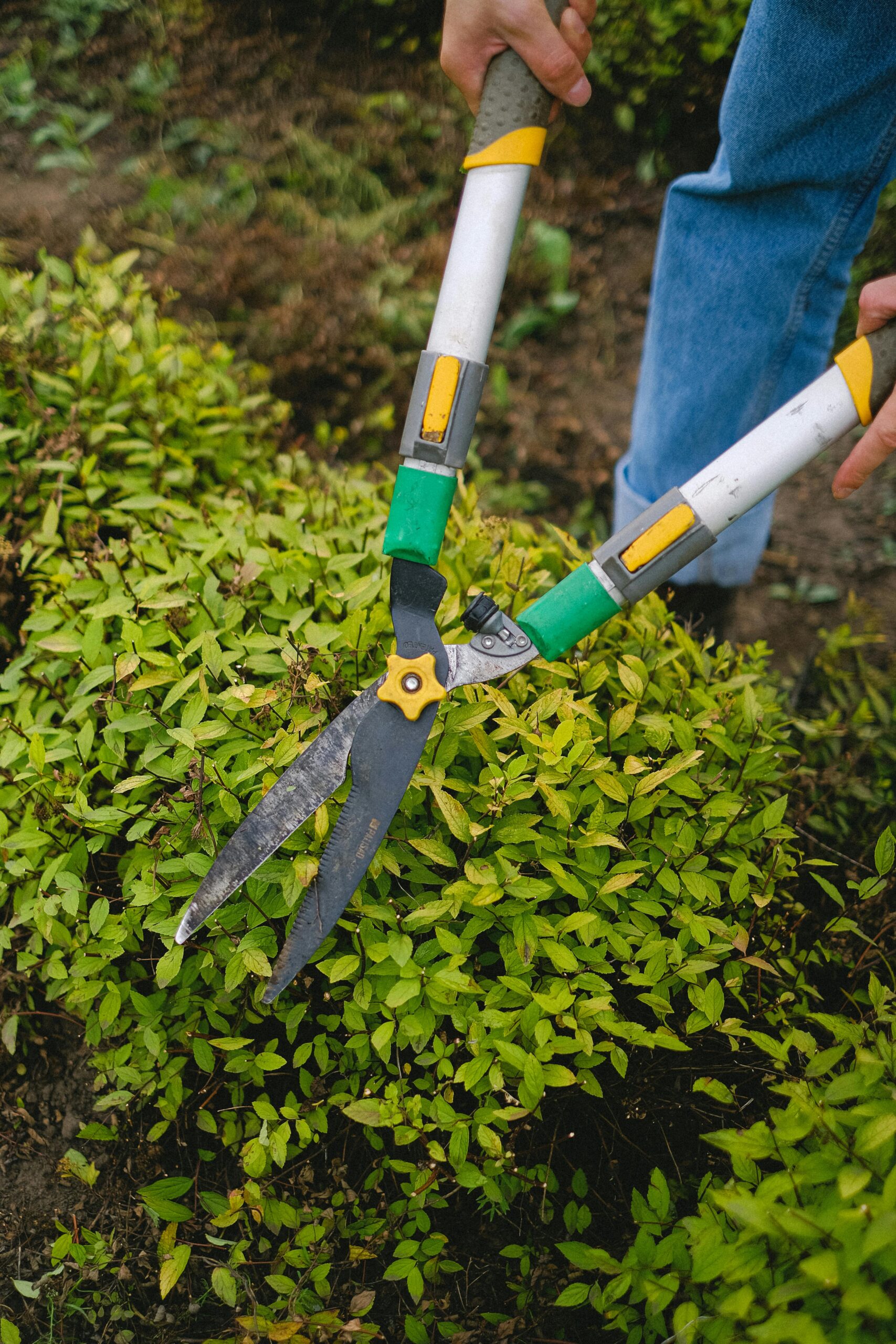
Hedge shears are a must-have if you have hedges, boxwood, or any other shrubs that need to be shaped. These scissors with long blades let you cut a lot of area at once, which makes plants look smooth and even. Hedge shears are great for making straight lines, rounded shapes, and pretty patterns. They work best on young growth and stems that are softer. A lot of gardeners use hedge shears to keep decorative bushes looking nice or to keep plants small. When you buy shears, make sure they are made of light material, have sharp blades, and move smoothly. Some shears let you change the tension on the blades for more control. It’s important to sharpen your shears often because dull ones can hurt the plant and make trimming harder.
Heavy-Duty Pruning Saws
Loppers can’t cut through thick branches, but pruning saws can. These saws have curved, sharp blades that let you cut wood smoothly and safely. They work well on fruit trees, big shrubs, and areas of the garden that have gotten too big. Some pruning saws fold up to make them easier to store, while others are made to be stronger and don’t fold. Choose a pruning saw with strong teeth, metal that won’t rust, and a handle that is comfortable and won’t slip. A good saw is very helpful when you need to do a lot of trimming or reshaping on your plants during the seasons.
Pole pruners for trees that are tall or hard to reach
Some plants get too tall for hand tools, and using ladders to climb can be dangerous. Pole pruners are long tools that help you cut branches that are high up in the air. They usually come with both saw and cutting blades. Pole pruners are great for cutting off dead branches, shaping tall trees, and letting more air flow around the tops of plants. Choose poles that are light and made of aluminum or fiberglass so your arms don’t get tired too quickly. Adjustable pole lengths are also useful because they let you safely reach different heights.
Fine Maintenance with Garden Knives
A garden knife may look simple, but it is a very useful tool for taking care of plants every day. It helps you cut small stems, break up soil around roots, split plants, and get rid of weeds. People also use knives to cut down vegetables like lettuce and herbs. To keep from rusting, you need a strong stainless steel blade. Many gardeners like knives with curved blades because they give them more control when cutting around fragile stems. A garden knife is small, easy to carry, and very helpful for quick tasks around the house.
Hand Saws for Cutting Wood in Detail
Some gardeners like to use smaller hand saws for detailed work, especially when trimming shaped trees or decorative plants. Hand saws are more accurate than big pruning saws. They work great for bonsai, decorative plants, and older plants that need careful trimming. To keep the wood from getting hurt, these saws should have fine teeth.
Gloves: The Safety Tool You Should Always Use
When you garden, you have to deal with thorns, sharp edges, rough bark, and bugs. A good pair of gloves keeps your hands safe from cuts and makes trimming easier. Leather, rubber, and fabric are just a few of the materials that gloves can be made of. When you need to prune, it’s best to wear thick, strong gloves that won’t cut you and give you a good grip. Some gloves also protect your wrists from thorny plants like roses.
Tools for cleaning and sharpening maintenance
You need to take care of your pruning tools on a regular basis to keep them useful and safe. To keep blades sharp and free of rust, use sharpening stones and cleaning oil. When blades are dull, they make rough cuts that can hurt plants and raise the risk of infection. Cleaning your tools after each gardening session is a simple way to make them last longer. Many gardeners also use disinfectants to keep plants from getting sick from each other.
Final Thoughts
Tools for trimming and pruning are very important for keeping your garden healthy and beautiful. Taking care of plants is easier, faster, and more effective when you have the right tools. You can easily take care of any type of plant if you buy high-quality pruners, loppers, shears, saws, and safety gear. Every tool in your gardening kit has a specific job to do, and using them correctly will help your plants grow stronger and look better. Building a good set of pruning tools is one of the best things you can do for your plants in the long run, whether you’re a beginner or an expert gardener.
Questions and Answers
Q1: What kind of pruning tool should a beginner buy first?
Hand pruners are a good choice for beginners because they work for most of the trimming tasks you do every day. They are simple to use and work well for flowers, herbs, and small stems.
Q2: How often do you need to clean your pruning tools?
After each use, it’s best to clean your pruning tools. This stops rust, gets rid of plant sap, and keeps diseases from spreading to healthy plants.
Q3: What is the difference between anvil pruners and bypass pruners?
Anvil pruners work better on dry or dead branches, while bypass pruners work better on live stems.
Q4: Do all gardens need hedge shears?
You only need hedge shears if you want to shape bushes, hedges, or decorative shrubs. If not, hand pruners might be enough.
Q5: Why do plants need to be cut back?
Pruning helps plants stay healthy by getting rid of dead or weak parts, improving airflow, encouraging new growth, and keeping their shape looking good.

