
Plants bring life, color, and a sense of calm to any space. Whether you’re nurturing a small indoor collection or tending a large backyard garden, proper plant care is essential for healthy growth and long-term vitality. Many gardeners struggle with wilting leaves, poor growth, or pest infestations—but with the right knowledge and techniques, you can maintain vibrant, flourishing plants. This comprehensive guide covers essential plant care practices, common problems, and actionable tips to help your plants thrive.
Why Proper Plant Care Matters
Caring for plants goes beyond watering and sunlight. Proper plant care ensures:
-
Healthy Growth: Balanced nutrition and consistent care prevent stunted growth and yellowing leaves.
-
Pest and Disease Prevention: Well-cared-for plants are more resilient to insects, fungi, and viruses.
-
Longevity: Plants live longer when their specific needs are met.
-
Aesthetic Appeal: Thriving plants look lush and vibrant, enhancing your home or garden’s beauty.
Neglecting plant care can lead to poor development, nutrient deficiencies, and even plant death, making it critical to understand their unique requirements.
Essential Plant Care Practices
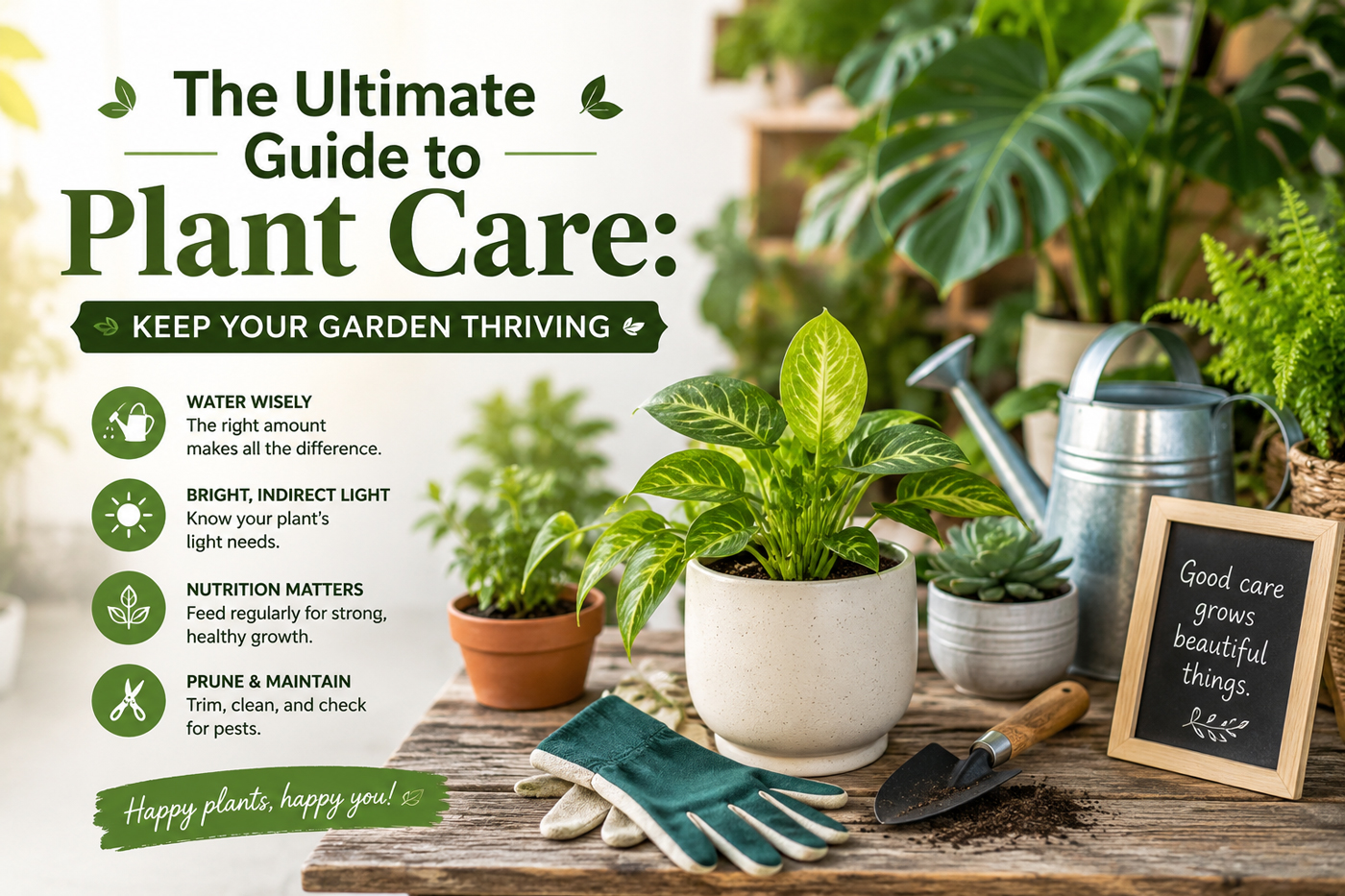
1. Watering Correctly
Watering is one of the most common challenges in plant care. Overwatering leads to root rot, while underwatering causes wilting and stress. Key tips include:
-
Know your plant: Some species prefer consistently moist soil, while others thrive in drier conditions.
-
Check the soil: Stick your finger 1–2 inches into the soil; if it feels dry, it’s time to water.
-
Water deeply: Ensure water reaches the root zone instead of just wetting the surface.
-
Morning watering: Watering early prevents evaporation and fungal growth.
2. Providing Adequate Light
Light is essential for photosynthesis, which fuels plant growth. Consider:
-
Sunlight requirements: Full-sun plants need 6–8 hours of sunlight, partial sun/shade plants thrive with 3–6 hours.
-
Indoor placement: Place houseplants near windows with filtered light or supplement with grow lights.
-
Rotate plants: Turning your plants ensures all sides receive light, promoting balanced growth.
3. Feeding Your Plants
Plants require nutrients for healthy growth. Fertilization tips include:
-
Organic vs. chemical fertilizers: Organic options improve long-term soil health, while chemical fertilizers provide quick results.
-
Balanced nutrients: Nitrogen encourages leaf growth, phosphorus supports roots and flowering, and potassium strengthens overall health.
-
Follow instructions: Over-fertilization can damage plants; always adhere to recommended amounts.
4. Pruning and Maintenance
Pruning promotes plant health and appearance:
-
Remove dead or damaged parts: Prevents disease and improves airflow.
-
Shape plants: Maintain a natural, attractive shape while preventing overcrowding.
-
Encourage growth: Pruning can stimulate new shoots and more abundant flowers or fruit.
5. Soil and Potting
Healthy soil is the foundation of thriving plants:
-
Well-draining soil: Avoid waterlogged roots; add sand or perlite to improve drainage.
-
Potting: Choose appropriately sized pots to prevent root crowding. Repot every 1–2 years for potted plants.
-
Mulching: Keeps soil moist, suppresses weeds, and moderates temperature.
Common Plant Problems and Solutions
Even with proper care, plants may face challenges. Here’s how to troubleshoot:
-
Yellowing leaves: Often caused by overwatering, nutrient deficiency, or poor drainage. Adjust watering and fertilize appropriately.
-
Wilting: Check soil moisture and root health. Overwatering or underwatering is usually the cause.
-
Pests: Aphids, spider mites, and whiteflies are common. Remove pests manually or use natural sprays like neem oil.
-
Fungal infections: Powdery mildew and leaf spots can appear in high humidity or poor air circulation. Prune affected leaves and ensure proper spacing.
Seasonal Plant Care Tips
Caring for plants varies with the seasons:
-
Spring: Fertilize actively, prune dead growth, and transplant seedlings.
-
Summer: Water consistently, shade delicate plants from extreme heat, and monitor pests.
-
Autumn: Reduce watering, mulch beds, and prepare plants for cooler weather.
-
Winter: Protect sensitive plants indoors, minimize fertilization, and prune dormant growth.
Seasonal adjustments prevent stress and promote year-round health.
Indoor Plant Care Tips
Indoor plants require special attention:
-
Humidity: Many indoor plants thrive in 40–60% humidity. Use a humidifier or pebble tray if needed.
-
Temperature: Maintain stable temperatures; avoid placing plants near drafts or heaters.
-
Cleaning leaves: Dust can block sunlight; gently wipe leaves with a damp cloth.
-
Pest prevention: Inspect plants regularly for pests and remove any affected foliage immediately.
Outdoor Plant Care Tips
Outdoor plants face unique challenges like weather, wildlife, and soil conditions:
-
Sun and shade management: Use shade cloths for sensitive plants or plant sun-loving varieties accordingly.
-
Mulching and composting: Conserves moisture and improves soil health.
-
Fertilizing schedule: Outdoor plants benefit from slow-release fertilizers and compost during growing seasons.
-
Pest barriers: Netting, companion planting, or natural sprays help protect plants from insects and animals.
FAQ: Plant Care
Q1: How often should I water my plants?
A1: Frequency depends on the plant type, soil, and environment. Check soil moisture before watering; most indoor plants thrive when the top inch of soil is dry.
Q2: Why are my plant leaves turning yellow?
A2: Yellow leaves often indicate overwatering, nutrient deficiency, or poor drainage. Adjust watering and consider fertilization.
Q3: Can I use the same fertilizer for all plants?
A3: Not always. Different plants have varying nutrient requirements. Follow plant-specific recommendations for best results.
Q4: How do I prevent pests naturally?
A4: Use companion planting, neem oil, insecticidal soap, and keep plants healthy. Healthy plants are more resilient to infestations.
Q5: When should I prune my plants?
A5: Prune dead, damaged, or overcrowded growth anytime. For flowering plants, prune after blooms fade to encourage new growth.
Conclusion
Proper plant care is the key to creating a vibrant and productive garden, whether indoors or outdoors. By understanding your plants’ unique needs for water, light, nutrients, and maintenance, you can prevent common problems and encourage healthy growth. From pruning and fertilizing to seasonal adjustments and pest control, following best practices ensures your plants thrive year-round.
Investing time and attention in plant care not only enhances the beauty of your home and garden but also provides a rewarding and relaxing hobby. With the right techniques, knowledge, and a little patience, you can enjoy flourishing plants that bring color, aroma, and life into your everyday environment.

